 02:26
Re: Can science solve our biggest problems?
From the creator
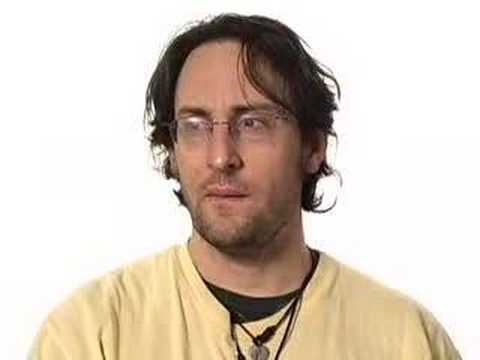
New videos DAILY: https://bigth.ink Join Big Think Edge for exclusive video lessons from top thinkers and doers: https://bigth.ink/Edge ---------------------------------------------------------------------------------- There are a lot of people in the tech world who think that if we collect as much data as much, and run a lot of statistics, that we will be able to develop robots where artificial "intelligence" organically emerges.However, many A.I.'s that currently exist aren't close to being "intelligent," it's difficult to even program common sense into them. The reason for this is because correlation doesn't always equal causation — robots that operate on correlation alone may have skewed algorithms in which to operate in the real world. When it comes to performing simple tasks, such as opening a door, we currently don't know how to encode that information — the varied process that is sometimes required in differing situations, i.e. jiggling the key, turning the key just right — into a language that a computer can understand. ---------------------------------------------------------------------------------- GARY MARCUS Dr. Gary Marcus is the director of the NYU Infant Language Learning Center, and a professor of psychology at New York University. He is the author of "The Birth of the Mind," "The Algebraic Mind: Integrating Connectionism and Cognitive Science," and "Kluge: The Haphazard Construction of the Human Mind." Marcus's research on developmental cognitive neur
Published 2012-04-24 · Watch on YouTube ↗
Availability and playback restrictions are controlled by the original channel.