 51:45
NASA’s Fermi Mission Sees No Gamma Rays from Nearby Supernova
From the creator
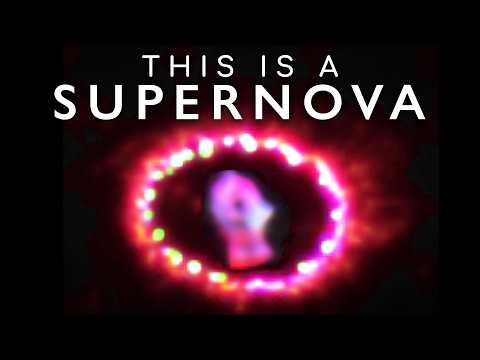
A nearby supernova in 2023 offered astrophysicists an excellent opportunity to test ideas about how these types of explosions boost particles, called cosmic rays, to near light-speed. But surprisingly, NASA’s Fermi Gamma-ray Space Telescope detected none of the high-energy gamma-ray light those particles should produce. On May 18, 2023, a supernova erupted in the nearby Pinwheel galaxy (Messier 101), located about 22 million light-years away in the constellation Ursa Major. The event, named SN 2023ixf, is the most luminous nearby supernova discovered since Fermi launched in 2008. Astrophysicists previously estimated that supernovae convert about 10% of their total energy into cosmic ray acceleration. Using Fermi observations of SN 2023ixf, scientists calculated an energy conversion as low as 1% within a few days after the explosion. This doesn’t rule out supernovae as cosmic ray factories, but it does mean we have more to learn about their production. Scientists have been investigating cosmic ray origins since the early 1900s, but the particles can’t be traced back to their sources. Because they’re electrically charged, cosmic rays change course as they travel to Earth thanks to magnetic fields they encounter. Gamma rays, however, do travel directly to us. And cosmic rays produce gamma rays when they interact with matter in their environment. Fermi is the most sensitive gamma-ray telescope in orbit, so when it doesn’t detect an expected signal, scientists must explain the
Published 2024-04-16 · Watch on YouTube ↗
Availability and playback restrictions are controlled by the original channel.